
SPRINKLER SYSTEM
REPAIR
Dry patches, soggy spots, zones that won't turn on, heads that spray the street. Whatever your sprinkler system is doing wrong, we trace it back to the actual cause, explain what we found in plain English and fix it, usually in the same visit.
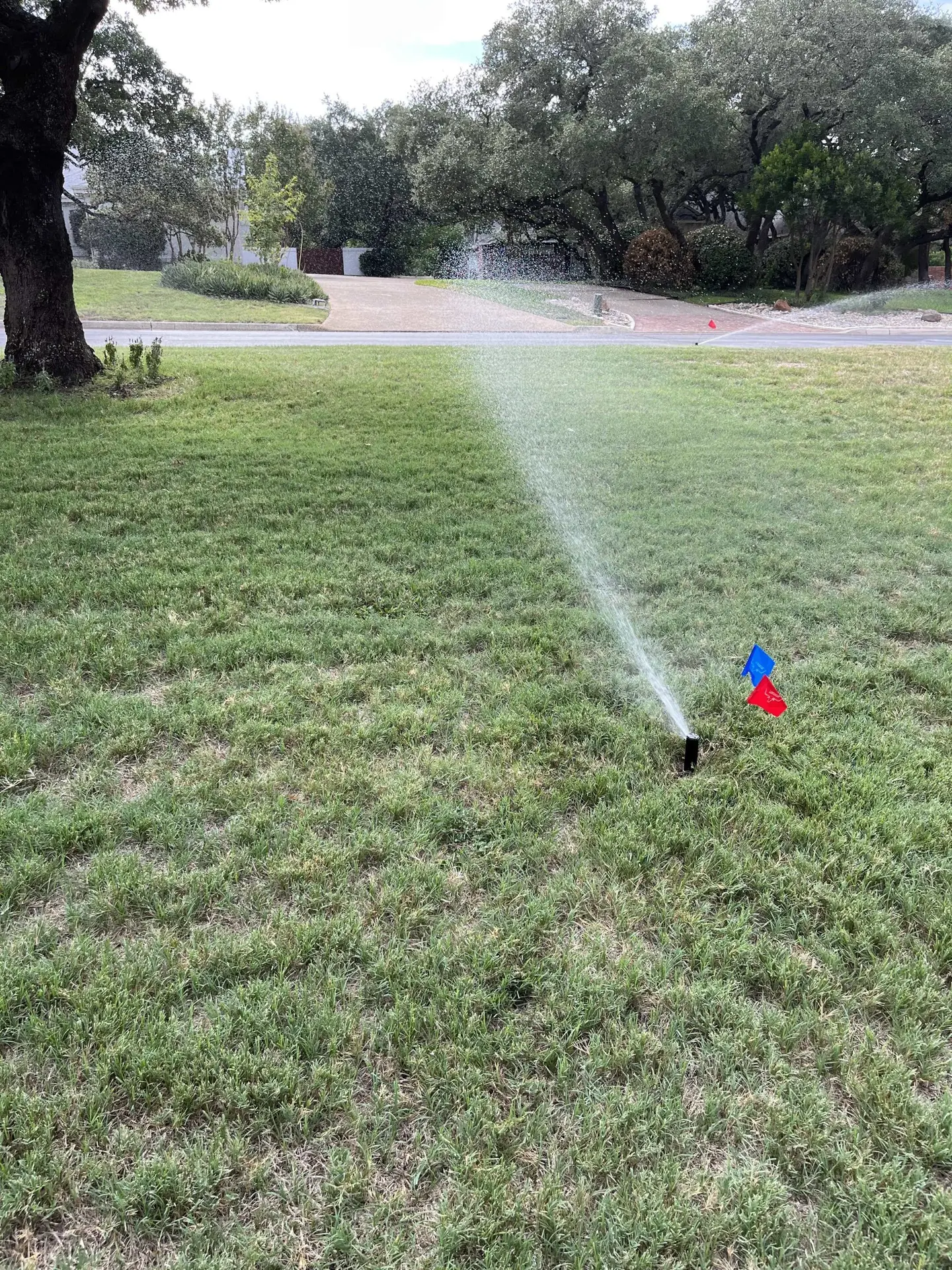
WHAT SPRINKLER SYSTEM REPAIR COVERS
An irrigation system is a chain of parts that all have to work together: the controller tells a valve to open, the valve sends water through buried pipe, and the heads or drip emitters put it on the lawn and beds. When any link in that chain fails, you see a symptom somewhere else, like a brown strip along the sidewalk, a zone that never comes on or a wet spot that never dries out.
Sprinkler repair is the work of following that symptom back to its source. A dry spot might be a clogged nozzle, a head knocked out of alignment by a mower, low pressure from a cracked lateral line, or a valve that only opens partway. Swapping parts until something works is expensive and slow. Testing each part of the chain is faster and gets the fix right the first time.
We repair all the common residential brands, including Hunter, Rain Bird, Toro, Irritrol and Weathermatic, and we carry the everyday parts on the truck so most repairs can be finished during the first visit. When something needs a bigger decision, like replacing an old controller or rerouting a line, we explain the options before any work starts.
Signs Your Sprinkler System Needs Repair
- Brown or dry patches while the rest of the lawn looks fine
- Soggy areas, puddles or water running down the curb
- A zone that won't turn on, or one that won't shut off
- Heads that don't pop up, stick up, or spray sideways
- Weak, misty or uneven spray across a zone
- Controller showing errors, blank screen or skipped zones
- Higher water bills with no change in your schedule
- Hissing, gurgling or water hammer when zones switch
HOW A SPRINKLER REPAIR VISIT WORKS
Every repair follows the same basic path, so nothing gets missed and you know what you're paying for before we start.
Listen & Look
We start with what you've noticed: which areas are dry or wet, when it started and anything that changed recently, like landscaping work, a freeze or a new fence. Then we look at the controller and the affected zones.
Run Every Zone
We run the system zone by zone and watch the heads, pressure and coverage. This often turns up more than one problem, like a broken head in one zone and a slow valve in another, so you're not surprised by a second call next month.
Test the Components
Depending on the symptom we test controller output, field wiring, valve solenoids, diaphragms and line pressure. Testing tells us which part actually failed instead of guessing.
Explain & Quote
We walk you through what we found, what it means for the system and what we recommend. You get a clear quote before any repair work begins, and you decide what gets done.
Make the Repair
Heads, nozzles, valves, solenoids, fittings, pipe and wire splices are repaired or replaced with quality parts. Where a repair touches the lawn, we dig carefully and put the turf back.
Re-Test & Adjust
We run the repaired zones again, adjust spray patterns and arcs, check the controller schedule and make sure everything is working before we leave.
COMMON SPRINKLER REPAIRS
Most sprinkler problems come down to a handful of components. These are the repairs we handle every day.
Heads & Nozzles
Broken, stuck, leaking or clogged heads replaced, nozzles matched to the zone, and heads raised or straightened so they clear the grass and spray where they should. See sprinkler head replacement.
Valves & Solenoids
Zones that won't come on, won't shut off or weep between cycles are usually a valve problem: a failed solenoid, torn diaphragm or debris in the valve. See valve repair.
Leaks & Broken Lines
Cracked lateral lines, broken fittings and main line leaks located and repaired, including damage from roots, freezes and digging. See leak detection.
Controllers & Timers
Controllers that won't power up, lose their programs or skip zones tested and repaired or replaced. See controller repair.
Wiring Faults
Cut, corroded or shorted valve wires traced from the controller to the valve box and spliced with waterproof connectors. Wiring faults often look like a bad valve or controller.
Sensors & Backflow
Rain and freeze sensors that stop working, and backflow assemblies that leak or fail, repaired or replaced. See sensors and backflow testing.
WHY ONE PROBLEM OFTEN MEANS ANOTHER
Sprinkler problems rarely travel alone. A broken head in one zone drops the pressure for every other head on that line. A valve that weeps overnight keeps the low end of the yard soggy, which invites fungus in the lawn and makes it look like a drainage problem. A controller with a dead backup battery can quietly reset to a default schedule that waters far more than you intended.
That's why we look at the whole system, not just the part you called about. It's also why we pay attention to what's happening around the irrigation. Tree roots crowding lines and heads, or water collecting where the yard doesn't drain, can keep breaking the same repair. When that's the real issue, we'll tell you and point you toward a fix like a root barrier or drainage work.
What We Check on Every Repair
- Every zone run and watched for coverage and pressure
- Controller schedule, start times and backup battery
- Rain or freeze sensor operation
- Visible leaks, weeping valves and soggy low spots
- Heads tilted, sunken or blocked by turf and plants
- Signs of root intrusion or drainage trouble near lines
WHEN A REPAIR ISN'T THE BEST MONEY SPENT
Most systems are worth repairing. Heads, valves and controllers wear out on their own schedule, and replacing the part that failed is usually the right call. But some systems reach a point where repairs stop making sense: pipe that keeps cracking because it was never buried deep enough, zones that were laid out so poorly they'll never water evenly, or a system so old that parts are hard to find.
When we see that, we'll say so plainly and explain your options, which might mean rezoning a few areas, converting beds to drip irrigation or, in some cases, planning a new system. There's no pressure either way. We'd rather give you an honest assessment than sell you a repair that won't last.
Whatever you decide, you'll know what's wrong, what it will take to fix and what to watch for going forward.
If you're comparing quotes, ask each company what they tested and why they're recommending each part. A good repair quote should connect the symptom you noticed to the specific failure that caused it.
SPRINKLER REPAIR ACROSS OUR TEXAS SERVICE AREAS
We provide sprinkler system repair throughout our Texas service areas, including Dallas-Fort Worth and Houston Metro communities as well as the Austin and San Antonio areas. We work on systems of every age and brand, on everything from small city lots to larger properties. See all the cities we serve or request service online.
SPRINKLER SYSTEM REPAIR FAQ
MORE WAYS WE PROTECT YOUR YARD
Sprinkler Head Replacement
Broken, stuck, leaking and misaligned heads replaced and adjusted.
Learn moreValve Repair & Replacement
Zones that won't turn on or won't shut off, fixed at the valve.
Learn moreLeak Detection & Line Repair
Hidden main and lateral line leaks found and repaired.
Learn moreSPRINKLERS NOT
WORKING RIGHT?
Tell us what you're seeing and we'll set up a visit to find the cause and fix it.