
RAIN & FREEZE
SENSOR INSTALLATION
Nothing looks worse than sprinklers running in a downpour, or icing over the sidewalk on a freezing morning. A properly installed rain and freeze sensor tells your controller to skip watering when it's wet or cold. We install, connect, test and repair sensors so they actually do their job.
HOW RAIN & FREEZE SENSORS WORK
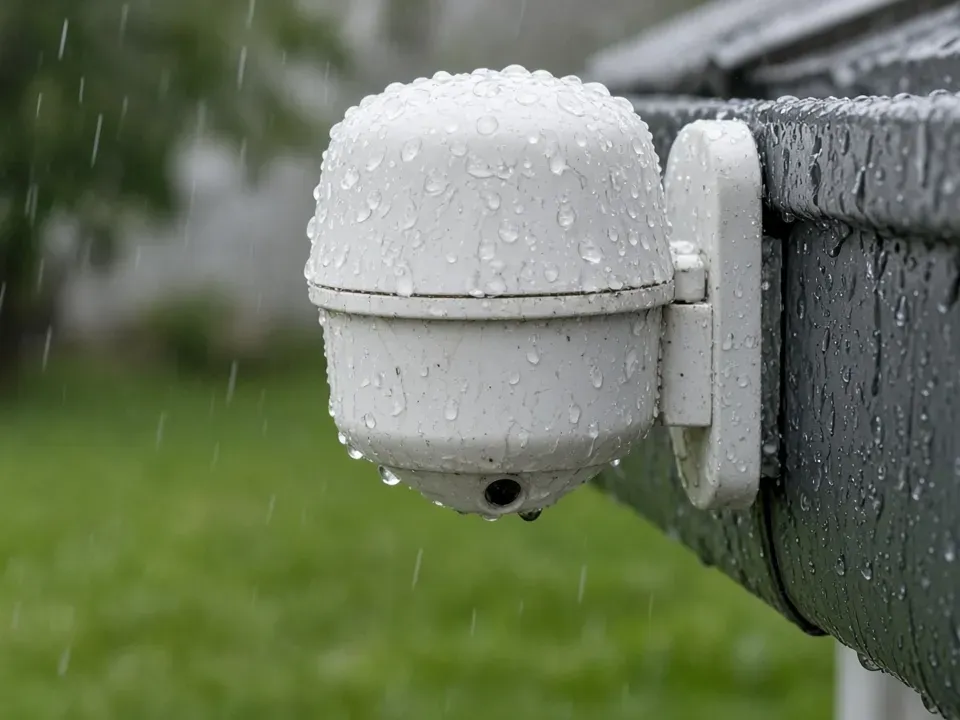
A rain sensor is a small device, usually mounted on the eave, fence or a gutter, that detects rainfall and signals your controller to pause watering. Many models use discs that swell when wet, interrupting the circuit until they dry out. A freeze sensor does the same thing when the temperature drops near freezing, and many units combine both functions.
Sensors come in wired and wireless versions. Wired sensors connect directly to the controller's sensor terminals. Wireless sensors use a receiver mounted near the controller, which makes installation easier where running a wire would be difficult. Smart controllers can also use weather data, and some pair with on-site sensors for better accuracy.
Sensors are simple, but they fail quietly. A disconnected wire, a sensor bypass switch left on, a dead wireless battery or a sensor blocked by an overhang all leave the system watering right through the rain without anyone noticing.
It's worth checking your sensor at the start of each season. A quick test, pressing the test button or wetting the sensor while a zone runs, will tell you whether it's still stopping the system the way it should.
Signs You Need a Sensor or Sensor Repair
- Sprinklers running during or right after rain
- Sprinklers running on freezing mornings
- Ice forming on sidewalks, driveways or streets
- A sensor with a broken or loose wire
- Controller sensor switch set to bypass
- Wireless sensor showing low battery or no signal
- Sensor mounted under an overhang or tree
- No sensor installed at all
HOW WE INSTALL AND TEST SENSORS
A sensor only works if it's placed, wired and set up correctly. Here's how we make sure it does.
Check the Controller
We confirm your controller supports a sensor and check whether a sensor is already installed, bypassed or disconnected.
Choose the Sensor
We recommend wired or wireless, rain-only or rain and freeze, based on your controller, mounting options and how far the sensor is from the controller.
Pick the Right Spot
The sensor needs open exposure to rainfall, away from overhangs, trees and sprinkler spray, and where freeze readings reflect real outdoor conditions.
Mount & Connect
We mount the sensor securely and connect it to the sensor terminals or wireless receiver, routing wire neatly and protecting it from damage.
Set & Enable
We set the rain threshold where adjustable, enable the sensor in the controller and make sure the bypass switch is set to active.
Test It
We simulate a rain event and confirm the controller pauses watering, then show you how the sensor works and how to override it if needed.
RAIN & FREEZE SENSOR TYPES
The right sensor depends on your controller and your property. These are the options we work with.
Wired Rain Sensors
Simple and reliable, wired sensors connect directly to the controller. They're a good fit where the controller is close to a suitable mounting spot.
Wireless Rain Sensors
Wireless sensors avoid running wire across the house. The receiver mounts near the controller and the sensor mounts wherever exposure is best.
Rain & Freeze Combo Sensors
Combination units pause watering for both rain and low temperatures, which is especially useful during Texas cold snaps.
Smart Controller Integration
Smart controllers use weather data to skip watering, and many also accept on-site sensors. See smart controllers.
Sensor Repair & Replacement
Damaged, weathered or unreliable sensors repaired or replaced, including broken wires and failed receivers.
Adjustable Thresholds
Many sensors let you set how much rain triggers a pause, so the system doesn't skip for a light sprinkle but does for real rainfall.
SENSORS PROTECT YOUR LAWN, NOT JUST YOUR WATER BILL
Watering on top of rain doesn't just waste water. It saturates the soil, which can starve roots of oxygen, encourage lawn fungus and leave low spots soggy for days. On clay soil, that extra water often runs off into the street. Many yards that seem to have drainage problems are simply getting irrigation on top of rain.
Freeze protection matters for safety. Water sprayed on freezing sidewalks, driveways and streets can turn into ice. Running the system in freezing weather is also hard on heads, pipes and the backflow preventer. A freeze sensor is an inexpensive layer of protection, especially paired with proper winterization.
Sensors also make the controller schedule more trustworthy. When you know the system will skip on its own during rain and cold, you can leave a sensible schedule in place instead of turning the system on and off by hand every time the weather changes.
What a Working Sensor Prevents
- Watering during and right after rainfall
- Soggy lawns and fungus from saturated soil
- Runoff into the street on clay soil
- Ice on walkways and streets
- Freeze stress on heads and exposed pipe
- Surprise water bills after rainy weeks
KEEPING YOUR SENSOR WORKING
Check your controller's sensor switch now and then. It's easy for someone to set it to bypass during a test and forget to switch it back. Keep the sensor clear of leaves, spider webs and overgrowth, and replace wireless sensor batteries when the controller signals low power.
If you've had landscaping, roofing or gutter work done, make sure the sensor wasn't moved, covered or disconnected. A sensor that gets tucked under a new patio cover won't see rain.
If the system still runs in the rain after you've checked those things, we can test the sensor and wiring and fix the problem.
Sensors are also inexpensive insurance for new sod and fresh plantings. A newly planted yard is easy to overwater, and a working rain sensor keeps the system from piling irrigation on top of a storm while roots are still getting established.
RAIN & FREEZE SENSORS ACROSS OUR TEXAS SERVICE AREAS
We provide rain and freeze sensor installation and repair throughout our Texas service areas, including Dallas-Fort Worth and Houston Metro communities as well as the Austin and San Antonio areas. We add sensors to existing controllers and include them as part of new controller and system installs. See all the cities we serve or request service online.
RAIN & FREEZE SENSOR INSTALLATION FAQ
MORE WAYS WE PROTECT YOUR YARD
Smart Controller Installation
Weather-aware Wi-Fi controllers installed and programmed zone by zone.
Learn moreWinterization & Spring Startup
Freeze prep in the fall and a careful system restart in spring.
Learn moreController & Timer Repair
Controllers that won't run, skip zones or lose programs, fixed.
Learn moreWATERING IN
THE RAIN?
We'll install or fix your rain and freeze sensor so your system knows when to skip.