
LEAK DETECTION &
LINE REPAIR
A buried irrigation leak can waste water for weeks before it shows up as a soggy patch, a sinkhole or a jump in your water bill. We track down main and lateral line leaks, repair the broken pipe or fitting and test the system so the problem is actually gone.
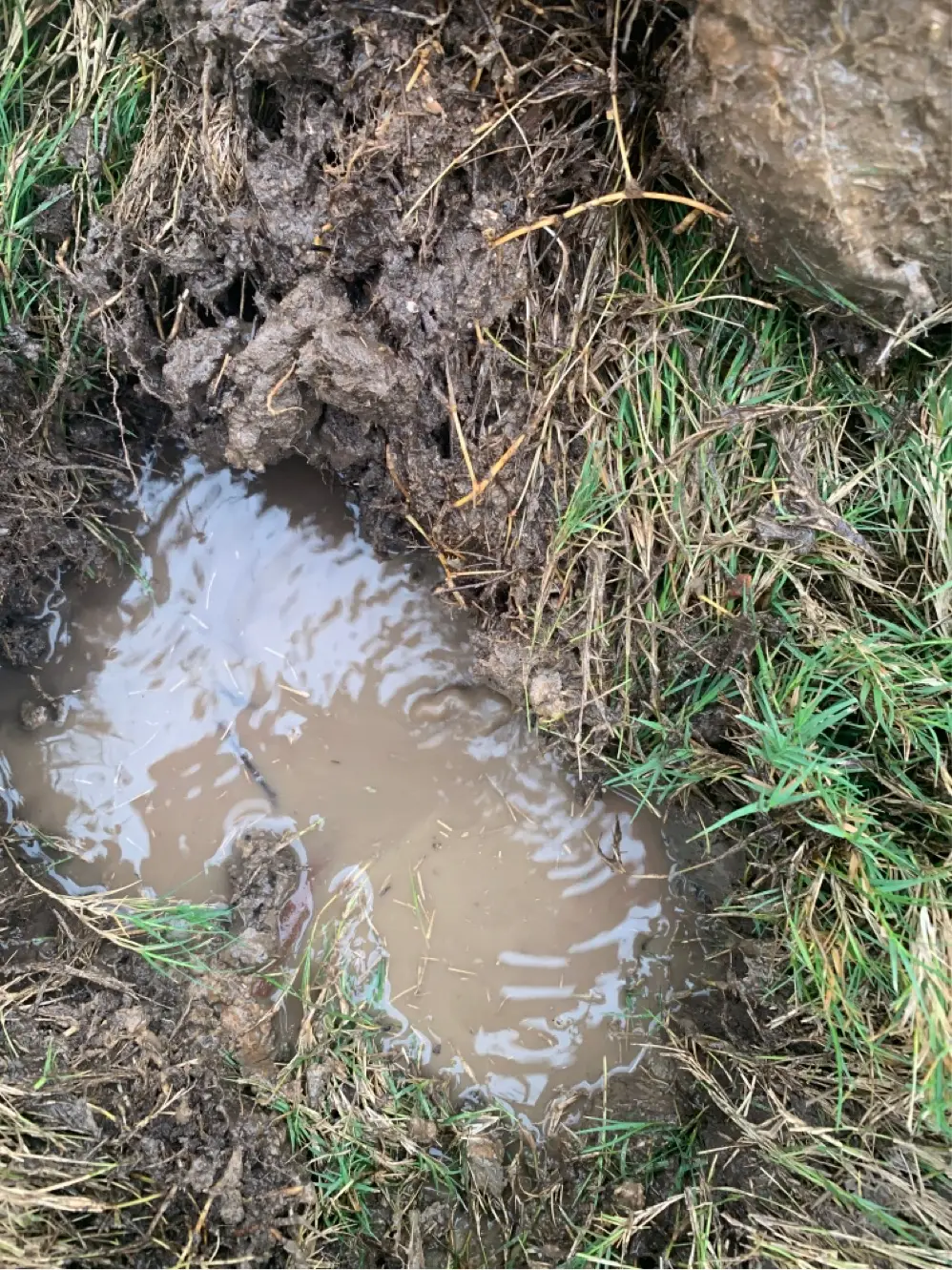
HOW IRRIGATION LEAKS HAPPEN
Your sprinkler system has two kinds of pipe. The main line runs from the water supply to the valves and stays pressurized all the time. The lateral lines run from each valve to the heads and only carry water while that zone is running. Leaks behave very differently depending on which one is broken, and that's the first clue we use to find them.
Texas soil is hard on buried pipe. Clay expands when it's wet and shrinks when it's dry, stressing joints and fittings. Freezes crack pipe that still holds water. Tree roots squeeze and split lines as they grow. Shovels, fence posts, aerators and utility work cut pipe that was buried too shallow. And old glue joints simply give out over time.
Finding a leak is often harder than fixing it. Water travels underground along the pipe and through loose soil, so the wet spot you see isn't always where the break is. We use pressure testing, zone isolation, careful observation and targeted digging to pinpoint the leak before we open up the lawn.
Lateral line leaks are sneakier. Because the pipe only holds pressure while its zone is running, a crack may only show up as weak spray at the far heads, a spot that bubbles for a few minutes each cycle, or a patch of grass that grows faster than the rest.
Signs of a Sprinkler Line Leak
- A water bill that's higher than usual with no schedule change
- Soggy ground or puddles that don't dry out
- A patch of grass greener and faster-growing than the rest
- Sunken soil or small sinkholes in the lawn
- Weak spray or low pressure on one or more zones
- Water running down the curb or sidewalk
- The water meter moving when everything is off
- Muddy water or air sputtering from heads
HOW WE FIND AND FIX LEAKS
We narrow the search step by step so we dig in the right spot and only as much as needed.
Main or Lateral?
We check whether water is lost when all zones are off. If it is, the leak is likely on the pressurized main line or at a valve. If not, it's on a lateral line that only leaks while its zone runs.
Isolate the Zone
We run zones one at a time and watch pressure, heads and the ground for clues, like a head with weak spray or a spot that bubbles when a particular zone runs.
Pinpoint the Break
Using the pipe layout, soil conditions and surface signs, we narrow down the leak location. Utility locates are requested through Texas 811 when digging near buried services.
Dig Carefully
We cut and set aside turf, dig by hand around the pipe and expose the break without damaging nearby lines, wires or roots more than necessary.
Repair the Line
Broken pipe is cut out and replaced with new pipe and fittings, glued or joined properly. If roots caused the break, we clear them and discuss ways to keep them away.
Pressure Test & Restore
We flush the line, run the zone and confirm the repair holds under pressure, then backfill, compact and restore the turf.
LEAK REPAIRS WE HANDLE
Leaks come from several different places in a system. These are the repairs we make most often.
Lateral Line Repair
Cracked or split lateral pipe between the valve and the heads, often from roots, freezes or digging, cut out and replaced.
Main Line Repair
Leaks on the always-pressurized main line are repaired quickly, since they waste water around the clock whether zones are running or not.
Fitting & Joint Repair
Failed tees, elbows, couplings and glue joints replaced. These are some of the most common leak points in older systems.
Head & Riser Leaks
Cracked risers, broken swing joints and leaking head bodies replaced. These often show up as a wet spot right at a head.
Valve Leaks
Leaks at the valve body, bonnet or connections repaired or the valve replaced. See valve repair.
Line Rerouting
When a line keeps breaking in the same place, rerouting it around a tree or away from a driveway edge can be the lasting fix.
WHEN THE LEAK ISN'T THE ONLY PROBLEM
Leaks and tree roots feed each other. A small leak creates a pocket of wet soil, roots grow toward it and into the fitting, and as they thicken they crack the pipe further. If we find roots at a break, we'll show you, and when it makes sense we'll talk about rerouting the line or installing a root barrier so it doesn't happen again.
Leaks can also look like drainage problems. A constantly wet low spot might be a slow leak or a weeping valve rather than poor grading. We rule out the irrigation first, and if the yard really does hold water after rain, we can help with drainage service too.
Related Problems We Look For
- Roots growing into or around the broken line
- Weeping valves that mimic a leak
- Heads draining at low points of a zone
- Pipe buried too shallow near beds and walks
- Soil washout or soft spots near the slab
- Freeze damage on exposed pipe and backflow
CHECKING FOR A LEAK YOURSELF
You can do a simple check with your water meter. Make sure no water is being used inside or outside the house, then look at the meter's flow indicator (often a small dial or triangle). If it's moving with everything off, you have a leak somewhere, which could be in the irrigation main line or elsewhere in the plumbing.
If your irrigation system has its own shutoff valve, close it and check the meter again. If the movement stops, the leak is likely in the irrigation system. If it keeps moving, the leak may be in the house plumbing, and a plumber is the right call.
Either way, don't wait long. Irrigation leaks waste water, soften soil near foundations and walks, and tend to get worse over time.
LEAK DETECTION ACROSS OUR TEXAS SERVICE AREAS
We provide sprinkler leak detection and line repair throughout our Texas service areas, including Dallas-Fort Worth and Houston Metro communities as well as the Austin and San Antonio areas. We handle leaks on residential and commercial systems, from small lateral cracks to main line breaks. See all the cities we serve or request service online.
LEAK DETECTION & LINE REPAIR FAQ
MORE WAYS WE PROTECT YOUR YARD
SUSPECT A
HIDDEN LEAK?
High bill, soggy spot or weak pressure? We'll find the leak, fix the line and make sure it holds.