
SPRINKLER VALVE
REPAIR & REPLACEMENT
When a zone won't turn on, won't turn off or keeps leaking after the cycle ends, the valve is usually to blame. We diagnose the solenoid, diaphragm, wiring and valve body, then repair or replace what failed so every zone opens and closes on command.
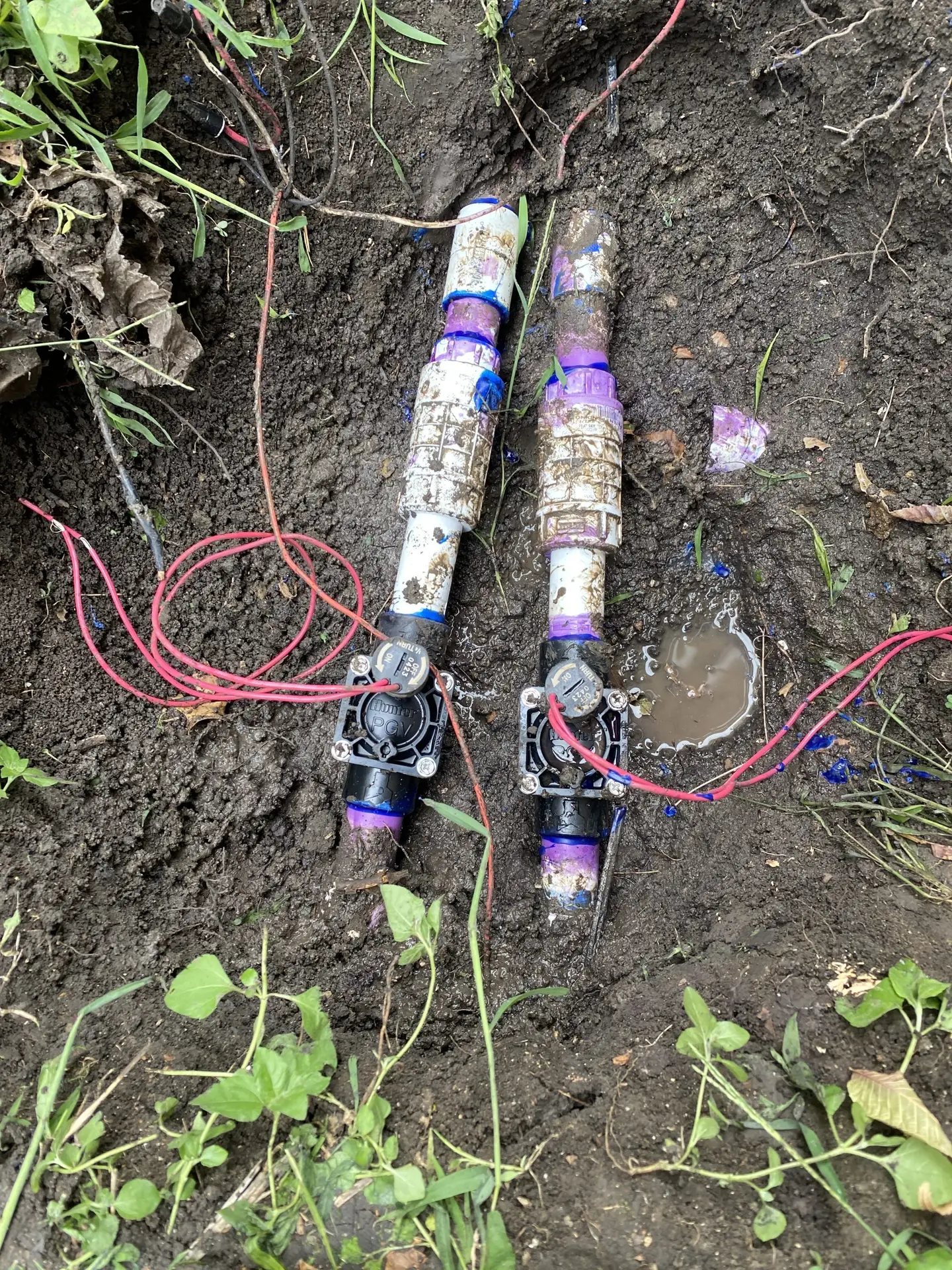
WHAT A SPRINKLER VALVE DOES
Every zone in your sprinkler system has its own valve, usually buried in a green box in the lawn or bed. When the controller sends a low-voltage signal, the valve's solenoid lifts a small plunger, pressure shifts across a rubber diaphragm and the valve opens to send water to that zone. When the signal stops, the valve closes. It's a simple design, but it depends on clean water, good wiring and parts that seal properly.
Over time, grit and debris lodge in the valve, diaphragms stiffen or tear, solenoids burn out and wire connections corrode. The results are easy to spot once you know what to look for: a zone that never runs, a zone that runs by itself, or water that keeps trickling from the lowest heads long after the cycle is over.
Valve problems are also easy to misdiagnose. A zone that won't come on might have a bad valve, but it might also have a cut wire or a controller station that's stopped sending power. That's why we test before we replace anything.
Older systems sometimes have valves buried without boxes, or boxes that have been covered by sod and mulch over the years. Finding them is part of the job, and once we do, we make sure they're marked and accessible so the next repair is quicker.
Signs of a Sprinkler Valve Problem
- A zone that won't turn on at all
- A zone that won't shut off, or runs on its own
- Water seeping from low heads after the cycle ends
- Soggy spots near a valve box
- Weak pressure on one zone only
- Humming or buzzing from the valve box
- Two zones running at the same time
- Valve box full of water or mud
HOW WE REPAIR SPRINKLER VALVES
We test the whole signal path from controller to valve so we fix the actual failure, not just the most likely one.
Locate the Valves
We find the valve boxes for the problem zones. If boxes are buried or lost, we use the wiring and pipe layout to track them down.
Test the Signal
We check the controller's output for that station and test the field wire and solenoid with a meter. This tells us whether the problem is electrical or mechanical.
Open & Inspect
We open the valve and inspect the diaphragm, spring, seat and bleed ports for tears, debris and wear.
Repair or Replace
Depending on what we find, we clean the valve, replace the solenoid or diaphragm, or replace the entire valve when the body is cracked or parts are no longer practical to repair.
Fix Wiring
Corroded or loose wire splices are cut back and remade with waterproof connectors so the connection holds up underground.
Test & Tidy
We run the zone several times to confirm it opens and closes cleanly, check for leaks and leave the valve box clean and accessible for future service.
VALVE REPAIRS WE HANDLE
Not every valve problem needs a new valve. Here are the fixes we use most, from simple to more involved.
Solenoid Replacement
A burned-out or stuck solenoid is a common reason a zone won't turn on or off. Replacing it is quick and often solves the problem without touching the valve body.
Diaphragm & Seal Repair
Torn or stiff diaphragms cause weeping and zones that won't close. A new diaphragm restores the seal on a valve that's otherwise in good shape.
Debris Cleaning
Sand, grit and pipe debris can hold a valve partly open. Cleaning the valve and flushing the line often restores normal operation.
Full Valve Replacement
Cracked bodies, stripped bonnets and worn-out valves are replaced with quality valves, installed with unions or proper fittings for easier future service.
Wire Splice Repair
Corroded splices and nicked wires cause intermittent problems. We remake connections with waterproof, direct-burial connectors.
Valve Box Service
Crushed, buried or flooded valve boxes are replaced or raised so valves stay dry, protected and easy to reach.
HOW A BAD VALVE AFFECTS YOUR YARD
A valve that doesn't close completely is one of the most common hidden water wasters. Water trickles through the zone for hours, draining out of the lowest heads and keeping one part of the yard wet all the time. Many homeowners assume they have a drainage problem when the real culprit is a weeping valve. Before you pay for drainage work, it's worth ruling this out.
On the other side, a valve that opens only partway starves its zone of pressure, leading to weak spray and dry spots. A stuck-open valve can run all night and flood part of the property. Getting valves working right is one of the most effective ways to protect both your lawn and your water bill.
What We Check Around the Valve
- Low heads draining after the cycle ends
- Pressure and flow on the zone once repaired
- Controller station output and program
- Master valve operation, if the system has one
- Valve box condition and drainage
- Nearby lines and fittings for leaks
WHAT TO DO IF A ZONE WON'T SHUT OFF
If a zone keeps running after you turn the controller off, the valve is stuck open. Most valves have a flow control handle or a bleed screw you can try to close, but the quickest safe step is to turn off the water supply to the irrigation system. Many Texas homes have a separate shutoff for irrigation near the backflow preventer or at the meter.
Don't let a stuck zone run for days. Besides the water waste, constant water can wash out soil, soften the ground near the slab and damage plants. Shut off the supply and schedule a repair.
If you're not sure where your irrigation shutoff is, ask us on the visit. We're happy to show you so you know what to do next time.
VALVE REPAIR ACROSS OUR TEXAS SERVICE AREAS
We provide sprinkler valve repair and replacement throughout our Texas service areas, including Dallas-Fort Worth and Houston Metro communities as well as the Austin and San Antonio areas. We service valves from all the common irrigation brands, on both older systems and newer installs. See all the cities we serve or request service online.
VALVE REPAIR & REPLACEMENT FAQ
MORE WAYS WE PROTECT YOUR YARD
Controller & Timer Repair
Controllers that won't run, skip zones or lose programs, fixed.
Learn moreLeak Detection & Line Repair
Hidden main and lateral line leaks found and repaired.
Learn moreSprinkler System Repair
Full diagnosis and repair of heads, valves, lines, wiring and controllers.
Learn moreZONE STUCK
ON OR OFF?
Tell us which zone is misbehaving and we'll find out whether it's the valve, the wiring or the controller and fix it.