
DRIP IRRIGATION
REPAIR & INSTALLATION
Spray heads were made for lawns, not flower beds. Drip irrigation delivers water slowly and directly to the roots of shrubs, perennials, trees and gardens, with far less overspray and runoff. We install new drip zones, convert spray beds to drip and repair drip systems that have stopped working.
WHAT DRIP IRRIGATION IS
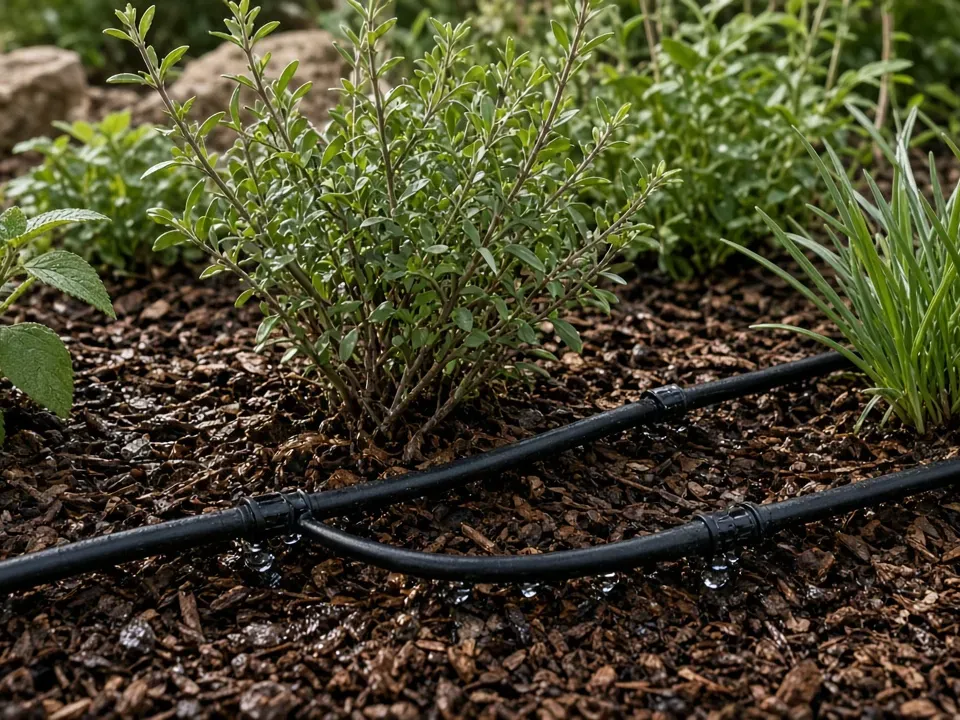
Drip irrigation uses low-pressure tubing and emitters to deliver water slowly, right at the soil surface or just below mulch. Instead of spraying water through the air, where it drifts in the wind, evaporates in the heat and lands on walls and walkways, drip puts it where plant roots can use it.
A drip zone starts at a valve like any other zone, then passes through a filter and a pressure regulator that bring the water down to the low pressure drip needs. From there, water flows through tubing with built-in emitters, or through individual emitters placed at each plant. Because the flow is slow, drip zones usually run longer than spray zones, but they use water much more precisely.
Drip is a strong fit for Texas landscapes, where beds are often packed against the house, shrubs block spray heads and hot, windy afternoons make spray watering inefficient. It's also good for trees, container plantings, vegetable gardens and narrow strips where spray heads always overspray.
Drip also helps keep water away from places it shouldn't be. Beds along the house get what they need without spraying walls, windows or the slab, and narrow strips between walks and driveways can be watered without soaking the concrete.
Signs Your Beds Need Drip (or Drip Repair)
- Spray heads in beds blocked by shrubs and plants
- Water spraying onto walls, windows or walkways
- Some plants thriving while others dry out
- Mulch and soil washing out of beds
- Drip tubing exposed, chewed or disconnected
- Emitters clogged or missing
- Soggy spots from a broken drip line
- A drip zone that barely waters at all
HOW WE INSTALL AND CONVERT TO DRIP
Whether it's a new zone or a conversion from spray, a good drip system starts with a plan.
Walk the Beds
We look at what's planted, where, how much sun each area gets and how the current system waters it, so the drip design fits your plants.
Plan the Layout
We decide between inline emitter tubing and individual emitters, how to route lines around plants and where to place filters, regulators and flush points.
Convert or Add a Zone
For conversions, we cap spray heads and connect drip to the existing zone with the right filter and regulator. For new areas, we add a zone where needed.
Lay & Secure Tubing
Tubing is laid around plants, staked in place and covered with mulch where appropriate. Emitters are placed to reach each plant's root zone.
Flush & Test
We flush the lines, check every emitter for flow, look for leaks and confirm the pressure is correct.
Program the Zone
Drip zones need different run times than spray. We set a schedule that soaks the root zone without overwatering.
DRIP IRRIGATION COMPONENTS
A drip system is built from a few key parts. The right mix depends on your plants and layout.
Inline Emitter Tubing
Tubing with emitters built in at regular spacing. Good for densely planted beds, hedges and groundcovers where you want even coverage.
Point-Source Emitters
Individual emitters placed at each plant. Useful for shrubs, trees and containers spaced apart, where each plant needs its own supply.
Filters & Pressure Regulators
Drip emitters have tiny openings and need low pressure. A filter keeps debris out and a regulator protects tubing and emitters.
Tree Rings
Loops of drip tubing around trees water the root zone evenly, instead of spray heads blasting the trunk. A good option near a root barrier.
Drip Repair
Cut, chewed, kinked and disconnected tubing repaired, clogged emitters replaced and filters cleaned.
Flush Valves
Flush points at the ends of lines make it easy to clear sediment so emitters keep flowing.
WHY DRIP AND SPRAY SHOULDN'T SHARE A ZONE
Drip and spray apply water at very different rates. If drip emitters are added to a spray zone, either the spray heads overwater the lawn while the drip catches up, or the drip plants go thirsty. The right approach is to give drip its own zone or convert the whole zone to drip with proper filtration and pressure regulation.
Drip also changes how the rest of the system behaves. Removing spray heads from beds reduces overspray onto walls and walkways, cuts runoff and keeps water off foundations. Near trees, drip can reduce the constant surface moisture that encourages shallow roots to crowd lines and heads.
Converting beds to drip can also simplify your watering schedule. Once the lawn and beds are on separate, properly set zones, you can tune each one without compromising the other, which usually means healthier plants and fewer wet or dry trouble spots.
What We Get Right With Drip
- Drip on its own zone, separate from spray
- Filter and pressure regulator on every drip zone
- Emitter placement matched to each plant
- Run times set for slow application
- Spray heads capped properly during conversion
- Flush points for easy maintenance
KEEPING DRIP WORKING
Drip systems need a little attention. Clean the filter periodically, flush the lines now and then and watch for plants that suddenly look stressed, which can signal a clogged emitter or a broken line. Be careful when digging in beds, since drip tubing sits near the surface.
Mulch helps drip work better by keeping moisture in the soil and protecting tubing from sunlight. As plants grow, emitters may need to be moved outward to reach the expanding root zone.
If you're not sure whether your drip system is working, a system audit will check it along with the rest of your zones.
For new plantings, we can design drip so it's easy to expand as the landscape fills in, adding emitters or tubing without rebuilding the zone.
Critters and tools are the most common causes of drip damage. Squirrels and other animals sometimes chew tubing in dry weather, and shovels and edgers can nick lines hidden under mulch. Most of these repairs are quick once the break is found.
DRIP IRRIGATION ACROSS OUR TEXAS SERVICE AREAS
We provide drip irrigation installation, conversion and repair throughout our Texas service areas, including Dallas-Fort Worth and Houston Metro communities as well as the Austin and San Antonio areas. We install drip in flower beds, shrub borders, tree rings, gardens and narrow strips. See all the cities we serve or request service online.
DRIP IRRIGATION REPAIR & INSTALLATION FAQ
MORE WAYS WE PROTECT YOUR YARD
System Audit & Tune-Up
A zone-by-zone check of coverage, pressure, scheduling and repairs.
Learn moreRoot Barrier Installation
Keep tree roots out of sprinkler lines, walks and slabs.
Learn moreNew Sprinkler System Installation
New irrigation systems designed around your yard, soil and plants.
Learn moreBEDS NOT
GETTING WATERED?
We'll convert, install or repair drip so your plants get water at the roots.