
SPRINKLER HEAD
REPLACEMENT
Mowers, cars, foot traffic, freezes and plain old age all take their toll on sprinkler heads. We replace broken, stuck and leaking heads, match nozzles to the rest of the zone and set every spray pattern so water lands on the lawn instead of the sidewalk.
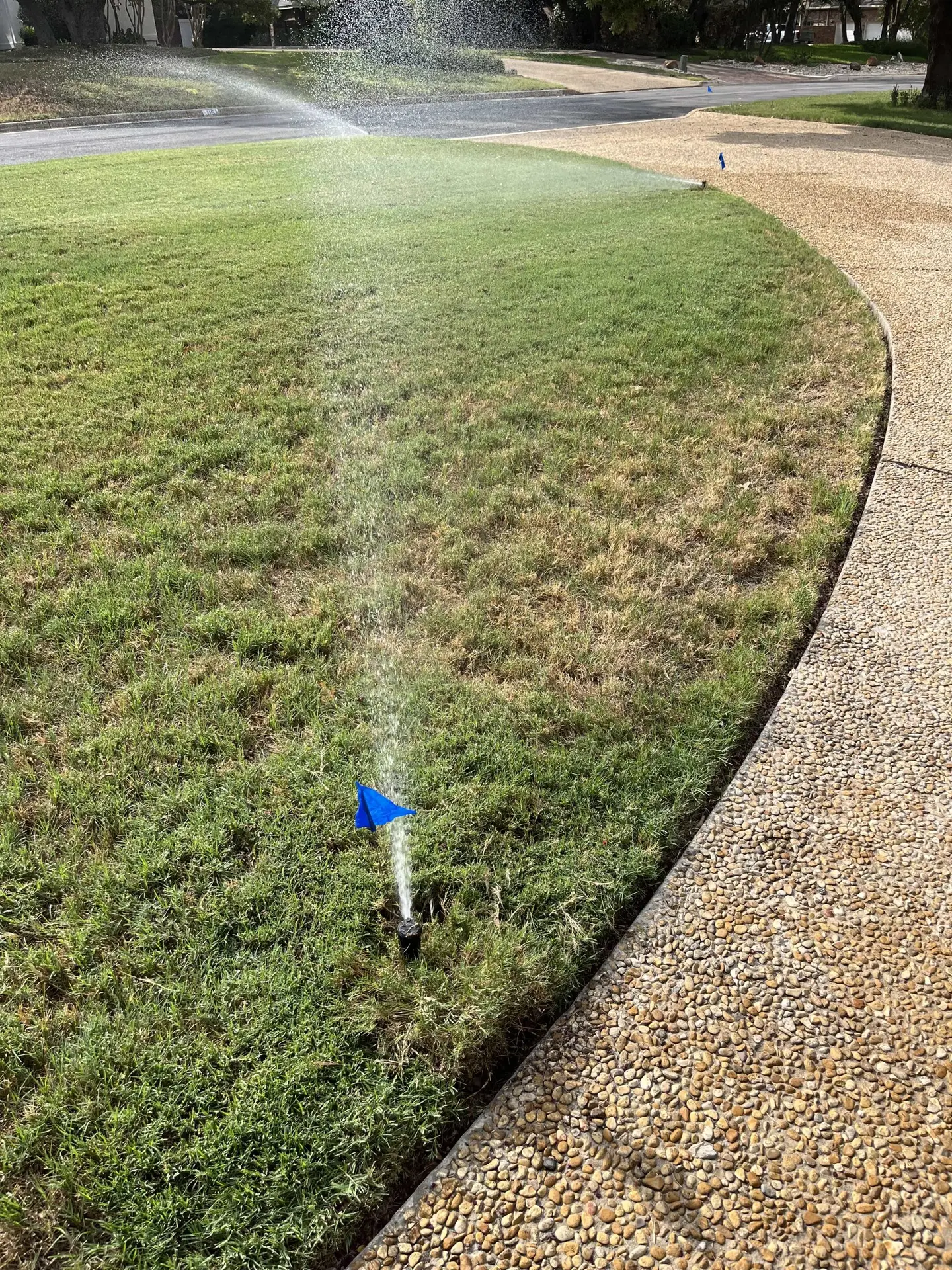
WHY SPRINKLER HEADS FAIL
Sprinkler heads are the hardest-working and most exposed part of your system. They sit at ground level, pop up and down thousands of times a season and take hits from mowers, edgers, tires and anyone who walks across the lawn. Grit in the water wears seals and gears, and freezing weather can crack bodies that still have water in them.
A failed head causes more trouble than it looks like. A broken head can blow water into the air and rob pressure from every other head on the zone, leaving dry spots at the far end. A head stuck in the up position becomes a trip hazard and a mower target. A head that's sunk below the turf sprays into the grass instead of over it.
Replacing a head sounds simple, but getting it right matters. The new head has to match the type, spray pattern and precipitation rate of the others on the zone, sit at the right height and be adjusted to the right arc and distance. Mixing mismatched heads is one of the most common reasons a zone waters unevenly even after it's been "fixed".
We also look at whether the head that failed was the right choice for that spot in the first place. A spray head trying to cover an area meant for a rotor, or a short pop-up buried in thick turf, will keep causing problems no matter how many times it's replaced.
Signs a Sprinkler Head Needs Replacing
- Water geysering or bubbling from a head
- Heads that don't pop up or don't retract
- Rotors that stop turning or get stuck on one spot
- Spray hitting the street, sidewalk, fence or house
- Dry rings or crescents around a head
- Cracked caps, missing nozzles or visible damage
- Heads sunken below the turf or tilted over
- Misting or fogging spray from high pressure
HOW WE REPLACE AND ADJUST HEADS
A good head replacement is more than a swap. Here's how we make sure the new head works with the rest of the zone.
Run the Zone
We turn on the zone and watch every head, not just the broken one, so we can spot any other heads that are clogged, misaligned or failing.
Identify the Right Match
We identify the head type (spray, rotor or rotary nozzle), pop-up height and nozzle pattern used on the zone so the replacement puts down water at the same rate as its neighbors.
Dig & Remove
We carefully dig around the head, cut back turf neatly and remove the old head without damaging the riser or the swing joint below it.
Install at Proper Height
The new head goes in level and at the right height for your turf. Where heads keep getting damaged, we add flexible swing joints that absorb impacts instead of cracking the fitting.
Flush & Set
We flush debris from the line before installing the nozzle, then set the arc, radius and direction so spray lands where it should.
Check Coverage
We run the zone again to confirm head-to-head coverage and adjust neighboring heads if needed, then replace the turf around the new head.
SPRINKLER HEAD OPTIONS
Each head type fits a different kind of space. We'll match what's on the zone or recommend an upgrade when it makes sense.
Spray Heads
Fixed spray heads cover small to medium areas like strips along walks and small front yards. They put down water quickly, so they're usually grouped on their own zones.
Rotor Heads
Rotors send a rotating stream across larger lawn areas. They apply water more slowly than sprays, which suits bigger open turf and helps reduce runoff.
Rotary (Multi-Stream) Nozzles
Rotary nozzles fit on spray bodies but throw rotating streams, applying water more slowly and evenly. They're a useful upgrade on sloped or clay-heavy areas.
Pressure-Regulated Bodies
Heads with built-in pressure regulation reduce misting and fogging when line pressure is high, so more water reaches the ground instead of drifting away.
Taller Pop-Ups
Taller pop-up heights help spray clear thick St. Augustine or taller groundcovers so water isn't blocked by the grass around the head.
Swing Joints & Risers
Flexible swing joints and properly sized risers protect the pipe from impacts and make it easy to set heads at the correct height.
HOW ONE BAD HEAD AFFECTS THE WHOLE ZONE
Sprinkler zones are designed for head-to-head coverage, meaning the spray from each head reaches the next one. When one head breaks, blocks or points the wrong way, it leaves a gap that shows up as a dry patch within a week or two of hot weather. The usual response is to add run time to the whole zone, which overwaters everything else to rescue one spot.
Fixing the head and restoring coverage is almost always the better answer. While we're there, we look for the causes of repeat damage too, like heads installed right at the edge of a driveway, a line of heads that roots keep lifting, or heads that sink in soggy soil where the yard doesn't drain. Solving those saves you from replacing the same heads every season.
What We Adjust Along With the Head
- Nozzle sizes matched across the zone
- Arcs and distances set to keep water off hardscape
- Heads raised above turf or lowered to a safe height
- Clogged nozzles and filters cleaned
- Swing joints added where heads keep breaking
- Run time reviewed once coverage is restored
KEEPING NEW HEADS IN GOOD SHAPE
A few habits go a long way. Flag heads before aerating or edging, keep turf trimmed back from spray heads so the spray isn't blocked, and watch for heads that stick up after mowing. If a head gets damaged, turn off that zone until it's fixed so a geyser doesn't waste water or wash out soil.
Location matters too. Heads that sit where cars park, where trash cans roll or right at the edge of a bed get hit far more often. Sometimes the best fix is moving a head a short distance, switching to a lower-profile model or adding a swing joint so it gives instead of breaking.
For beds and shrub areas where spray heads keep getting blocked by plants, converting to drip is often a better long-term solution than replacing heads over and over.
SPRINKLER HEAD REPLACEMENT ACROSS OUR TEXAS SERVICE AREAS
We provide sprinkler head replacement and adjustment throughout our Texas service areas, including Dallas-Fort Worth and Houston Metro communities as well as the Austin and San Antonio areas. We keep common heads and nozzles on the truck, so most replacements are handled during the first visit. See all the cities we serve or request service online.
SPRINKLER HEAD REPLACEMENT FAQ
MORE WAYS WE PROTECT YOUR YARD
Sprinkler System Repair
Full diagnosis and repair of heads, valves, lines, wiring and controllers.
Learn moreSystem Audit & Tune-Up
A zone-by-zone check of coverage, pressure, scheduling and repairs.
Learn moreDrip Irrigation
Drip lines for beds, shrubs and trees, installed, converted and repaired.
Learn moreBROKEN OR
STUCK HEADS?
Tell us which zone is giving you trouble and we'll replace, match and adjust the heads so it waters evenly again.